Nobel chemistry 2026: why molecules’ handedness matters
Henri Kagan and Kenso Soai share the chemistry prize for research that helps explain how reactions favor one molecular mirror image.
Key points
- The award was announced on 7 October 2026.
- The work concerns asymmetric synthesis, with relevance to pharmaceutical manufacturing.
Choosing between two mirror-image molecules can matter as much as choosing their ingredients. That problem is at the center of the 2026 Nobel Prize in Chemistry, awarded on 7 October to France’s Henri B. Kagan and Japan’s Kenso Soai.
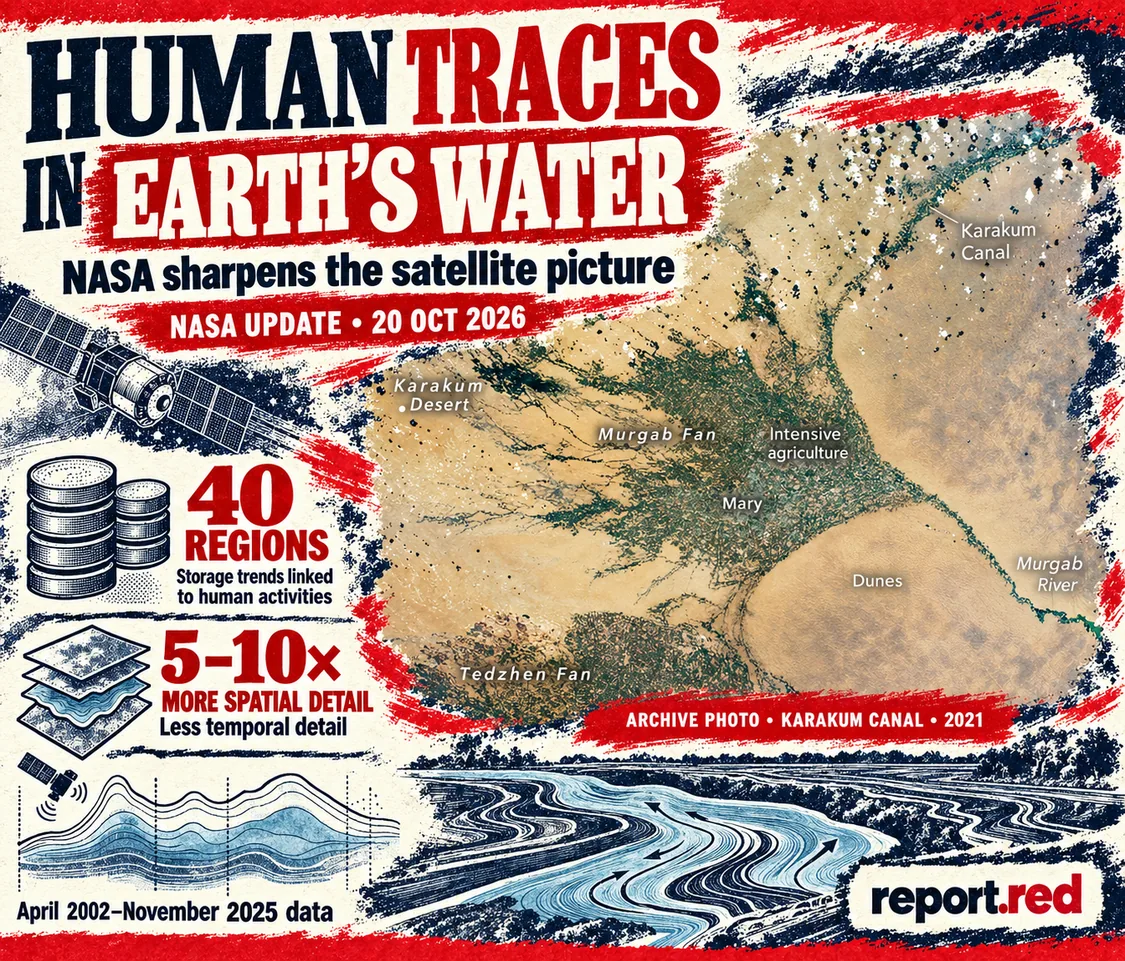
The Royal Swedish Academy of Sciences recognized non-linear effects and autocatalysis in asymmetric organic synthesis. In everyday terms, the research concerns reactions that favor one molecular ‘hand’ over the other, rather than producing an even mixture. The cover blends the real photograph with an editorial illustration by report.red.
How a small imbalance becomes a preference
The Academy traces Kagan’s contribution to 1986: reactions could amplify the preference for one mirror-image form beyond what chemists had expected. Its account then highlights Soai’s 1995 work on an autocatalytic reaction and a 2003 result producing only one of the two forms.
Autocatalysis means that a reaction’s product helps drive further production. The important question is how that process can strengthen a preference for one molecular form.
What the award changes for readers
This is recognition of longstanding research, rather than an announcement of a new medicine. The Academy identifies pharmaceutical manufacturing as an application of the chemistry: selecting the appropriate molecular form matters when designing compounds for biological systems.
The laureates will split 12 million Swedish kronor equally. The work supplies a chemical route to asymmetry; the prize announcement should not be read as proof of exactly how life first arose on Earth.
Historical photograph of Henri Kagan at École Polytechnique, uploaded in February 2014; this is not the 2026 prize announcement. Resized and converted to WebP without cropping; the photograph remains under CC BY-SA 2.0. Photo credit: Collections École Polytechnique / École polytechnique; individual photographer not named in source. Photo credit · CC BY-SA 2.0