Schools could hold spare adrenaline nasal sprays under new MHRA consultation
The consultation runs until 14 December 2026. It would give schools a further emergency backup option, with training and eligibility safeguards; the law has not yet changed.
In this article
Key points
- Consultation opened 19 October and closes at 11:59 pm 14 December 2026.
- The proposal concerns school reserve supplies, not a replacement for pupils’ prescribed medication.
- Trained staff and pupils known to be at risk remain central safeguards; implementation is conditional.
UK schools could gain the option to buy and keep spare adrenaline nasal sprays for pupils at risk of anaphylaxis, under an MHRA consultation opened on 19 October 2026. For families and school leaders, the immediate change is an opportunity to comment: the proposal has not yet changed the law. Responses are due by 11:59 pm on 14 December 2026. [1]
What would change in the school medicine cupboard?
The regulator proposes extending the existing exemptions for school-held adrenaline auto-injectors to authorised nasal sprays. That would allow a reserve supply without a prescription naming an individual pupil. It concerns access to an emergency medicine that the MHRA says it authorised in July 2025, rather than announcing a new medicine approval today. [2]
The detailed proposal covers schools in England, Scotland, Wales and Northern Ireland. Schools would be able to choose auto-injectors, nasal sprays or both; they would not be compelled to stock both types. Changes would require amendments to the Human Medicines Regulations 2012, followed by updated guidance, with devolved governments responsible for their own school guidance.
What stays with parents and trained staff?
The proposed reserve would remain for pupils known to be at risk, administered by appropriately trained school staff. School supplies would remain a backup: pupils should continue to bring their own prescribed adrenaline. The consultation also distinguishes a legal requirement from recommended practice: parental or guardian consent for use of a school spare is recommended in guidance, although consent is not a condition written into the legislation described by the regulator. [2]
These distinctions matter when reviewing an individual school’s policy. A consultation announcement alone does not show that a school has bought sprays, trained staff or changed a pupil’s emergency plan. Families should continue to follow their existing prescribed plan and the relevant product instructions; this article does not provide dosing or administration advice.
Where feedback could make a practical difference
The MHRA seeks views from pupils at risk, families, school staff and healthcare professionals, including on implementation and effects on those groups. Questions about staff training, storage and expiry checks are therefore directly relevant to a response. The official consultation page provides the response route. Whether and how the government proceeds remains open. This report is based on the regulator’s consultation documents, which are two pages from the same institution rather than independent clinical studies. [1]
More health reporting from the English edition
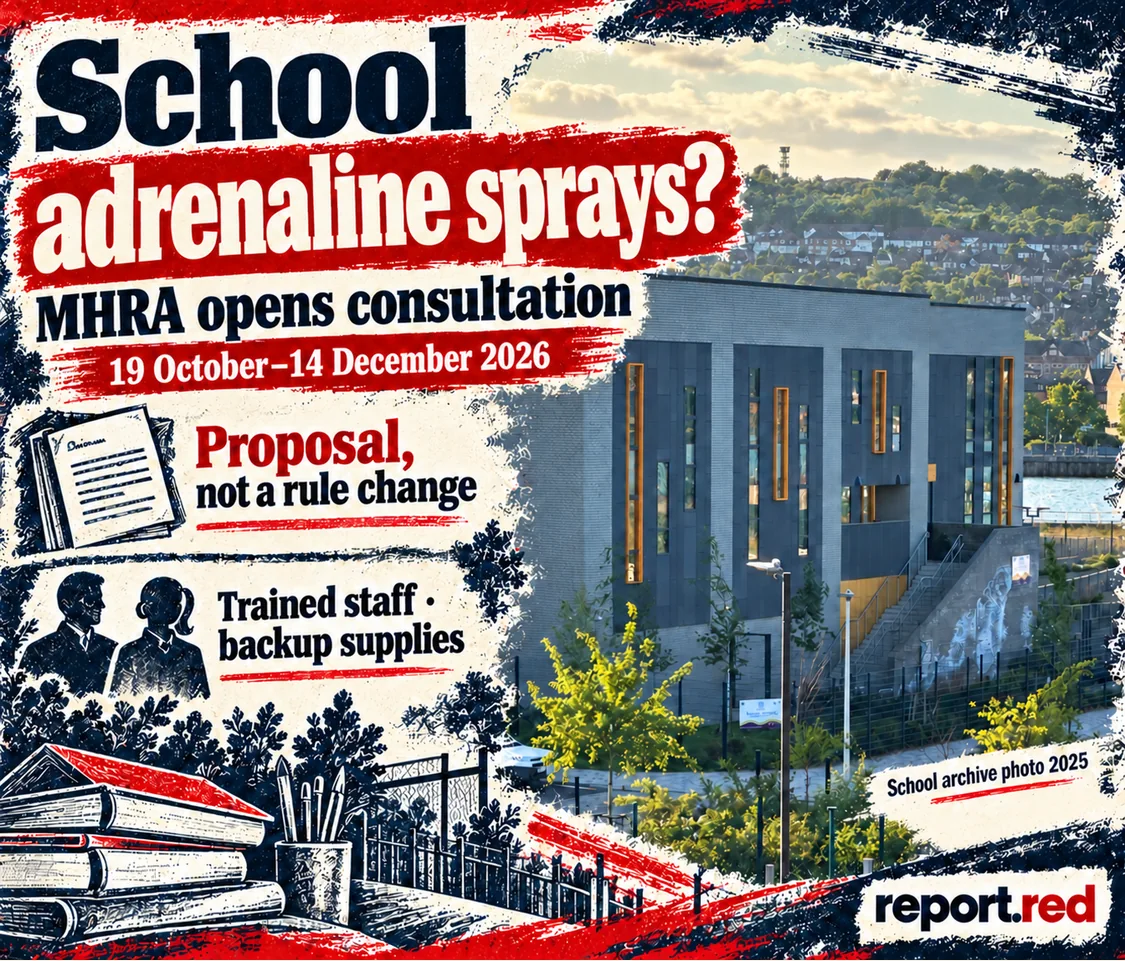
Archive photo: Rochester Riverside Church of England Primary School, Kent, 2025; contextual image, not evidence of this school’s medicines policy. Photo adapted into an AI-assisted editorial collage Sunolafjagtenben-hur · CC0. ImageGen / report.red.